Wednesday, May 11, 2016

Bent's Old Fort Trade Center on the Santa Fe Trail


Potential Market for ElephantsI think they could live comfortably part of the year on tall Prairie grass and scrub, but the average winter temperature is in the 40’s and most of the summer and fall the streams are undependable.

Date of My VisitSept 9, 2015


History: For over sixty years before the railroads took over the
1830's
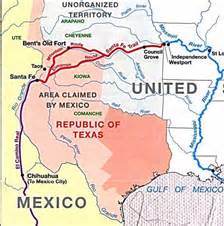
Santa Fe trail from Independence, Missouri to Santa Fe, Mexico was an important part of America's economy.  At the beginning there were almost no white settlements on the route.

The Santa Fe Trail Ran Here

Envision having spent several weeks nursing your oxen and mules on a  grassy trail in an area were the streams are very undependable. 


Then you come up one last bluff and over the tall prairie grass looms a giant adobe castle with the U.S. flag flying overhead.  As your head wagon pulls up to the main gate a man comes out with a pitcher of clean water. cooled with chips of ice!


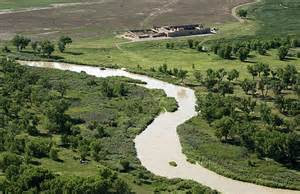
The fort, more of a castle since it is fortified but also a residence, was built in 1833 on the Arkansaw river, then the Mexican-American Border, by two brothers Charles and
Arkansaw River and Bent's Fort
William Bent and their partner Cernan St. Vrain.   They positioned it to service trade trains going both ways  on the  dry northern or mountain route. They were also in the right place to deal with fur trappers from the Rockies and trade with the southern plaines tribes.


William set up their business in Taos with St. Vrain, married into an important Mexican family and made regular trips to St. Louis to arrange supplies.  Charles took charge of the fort and relations with the Native Americans.   
Charles Bent

 He established an especially close relationship with the Southern Cheyenne, first saving two boys from traditional enemies, and then marrying Owl Woman.  She was the daughter of White Thunder, keeper of the Cheyenne Medicine arrows, the sacred symbol of the tribe.  They seem to have had a strong marriage and he took her younger sisters as co-wives.

Owl Woman

William was once struck by a serious infection while living in the Cheyenne camp and his throat became filled with pus.   Owl Women had to feed him broth through a quill.   His faith in the Cheyenne was such that he allowed a shaman named Lawyer to treat him.  Lawyer strung a handful of sand burs on a piece of animal tendon.  The burs had stiff barbs and when the tendon was forced down Bent’s throat and drawn out it pulled a quantity of slothing flesh with it.  Bent was able to breath, swallow and eventually regained his strength.  


The market in beaver furs dropped badly about the time the fort opened.  However a new market for buffalo hides was opening.  A few trappers were able to switch to being professional hunters but most of the hides were brought in by the Cheyenne and Arapaho.


By the late 1840’s the Bents had a
commercial empire who’s influence stretching from the current Canadian border to the Rocky Mountains and south into Mexico.  They imported goods from Europe and the Orient (pepper and tea especially) for sale as luxuries.


However in the 1840’s the United States prepared to alter the political face of the whole continent.


Texas, after winning its independence from Mexico,  had joined the U.S.   The expansionist elements in the United States saw a chance to use a conflict over the border of Texas and Mexico to start a war.  They could seize not only the disputed territory but California and its seaports.  


In 1846 U. S. troops and later militia units used the fort as a staging area.  Taos and Santa Fe were seized almost without resistance by American troops, possibly aided by bribery to the Mexican authorities there.   William Bent was appointed governor of the New Mexico territory.


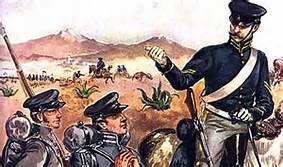
Of course the war interrupted all trade through Bent’s Fort, especially since the large numbers
Mexican American War Dragoons
of troops contaminated the water holes and their animals stripped the land. In 1847 a Mexican civilian uprising  killed Charles Bent and a number of other authorities appointed by the U.S. army   The resistance temporarily held Taos and US troop that had moved on to Mexico and California had to be recalled.


The Cheyenne were preparing to leave because they had killed off most of the buffalo, when in 1849 they were struck with a terrible cholera epidemic killing off over a third of their population.  Owl Woman had died in 1847, but Bent’s mother-in-law died during the epidemic.


William Bent and St. Vrain attempted to get reimbursed by the army for use of the fort and failing that tried to sell it to the military.  Finally in 1849 Bent set up a new trade center about 40 miles downriver. His remaining wives and children chose to stay with their tribe, but visited.   By 1853 he had  finished Bent’s New Fort, this one built of stone, which  was later purchased by the army.  


He died in Kansas City in 1869, still running a shipping company,  but is buried in Las Animas, Colorado not far from both forts that bore his name.


The structure standing today is a recreation. Shortly after being deserted the original seems to have been destroyed either by an accidental fire, or Indians, or possibly blown up by Bent in a fit of pique.  The remains of the fort were used to shelter a stagecoach station and later as a corral.


In 1950 the Colorado State Historical Society acquired Bent’s Old and New Forts.  In 1960 it was designated a National Historic Landmark by Congress and in 1976 the reconstruction of the fort  was completed.  It is now maintained by the National Park service.
   

The reconstruction was based on archeological finds and the reports  of many visitors.


Painting of River and Fort by Abert

Especially useful were sketches, drawings and paintings by Lt. James Abert who visited in 1845.


One of Abert's sketches

 In the published report of his assigned reconnaissance of the southwest Abert describes the fort as “composed of a series of rooms… forming a hollow square, with the entrance on the east side.   A round tower on the left…and another diagonally opposite… constitute the flanking arrangement. “

He observed the outer walls were nearly two feet thick and had pierced loop holes four feet above the flat roofs where gunners could knee and fire while sheltered.
View from Tower, with cannon. 
  

The entire structures was built of “adobes” sunburnt brick composed of clay and cut straw, which no attacker could set fire to. 


corral. 

There was a stone corral on the west side to protect animals.


Rest Room

My Visit:  I found the fort on CO 194 between La Junta and Las Animas Colorado.   When you arrive the first thing you see, beside the sign, is a rest room.   Its half buried architecture is a reminder that many homes used to be built that way on the prairie.  In fact it’s posted as a tornado shelter.


One can walk slightly less than a quarter mile or use a phone at the rest room to summon a golf cart to pick one up.  You get to experience a restored section of prairie grassland and then get the effect of the flag and fort appearing out of nowhere.  


After viewing the film on the trading post's history I was the only visitor to choose to have a guide take me around the fort.  My guide was a young lady dressed in a long skirt and loose embroider blouse wearing a knife with a deer antler handle.  I imagine  her appearance was close to that of a Mexican woman of the era.


Our first stop was the courtyard.   The giant cork screw is a press for changing piles of buffalo
Cannon in lower right
hides into easily transported bales.  The cannon wasn’t for show it’s aimed right through the door.


In some ways the center of the fort was the Trade Room where barter or an exchange of credit paid for furs, buffalo hides, and sometimes goods from Mexico. 


One thinks in terms of guns and powder but copper cooking wear was popular.  


The Native Americans sometimes cooked in buffalo stomachs.  Fill one with hot rocks, then pour in stew and let it cook till the
Buffalo stomach
rocks cool.  Naturally these didn’t last long and durable copper wear was a welcome replacement along with metal tools, needles and thimbles.  You try sewing with bone needles or thorns.


Fancy side
Ordinary side

The Dining room was were the social distinctions among the staff and guest were clearest.   On one side of the room was a table with table cloth, silver, candles, and porcelain for the owners and honored guests.  At the other tables  was pewter for the regular customers. 

The worker’s mostly ate in their rooms or the kitchen.


Hearth

Cooking was done here on the large limestone hearth, where you spread hot coals and then placed the iron wear on it.   When archeologists found the kitchen the hearth was still complete and smooth.  


Starting a Fire

The recreator who gave me my tour is here demonstrating  starting a fire with flint and tinder.


The kitchen was mostly run by Bent’s slave Charlotte, but Mexican and Indian women were sometimes hired to help.  The cuisine went from Mexican to rough frontier food to semi-formal dinners. 


For a few months in 1845 a Mrs. Dale worked there.  She had escaped after being kidnapped by Pawnee in a raid a few days east of the fort, on her way to Independence. Believing  her husband and pre-teen son had been killed she hoped to earn her way home. Then her son, who had been rescued and adoped by some American traders, stopped by the fort.  Their story was so moving the frontiersmen contributed travel money for them and a caravan going to St. Louis took them for free. 


Evenings the dining hall would be cleared and democracy took over as dancing would take place.  Charlotte was a much sought after partner when the harmonic and squeeze box came out.


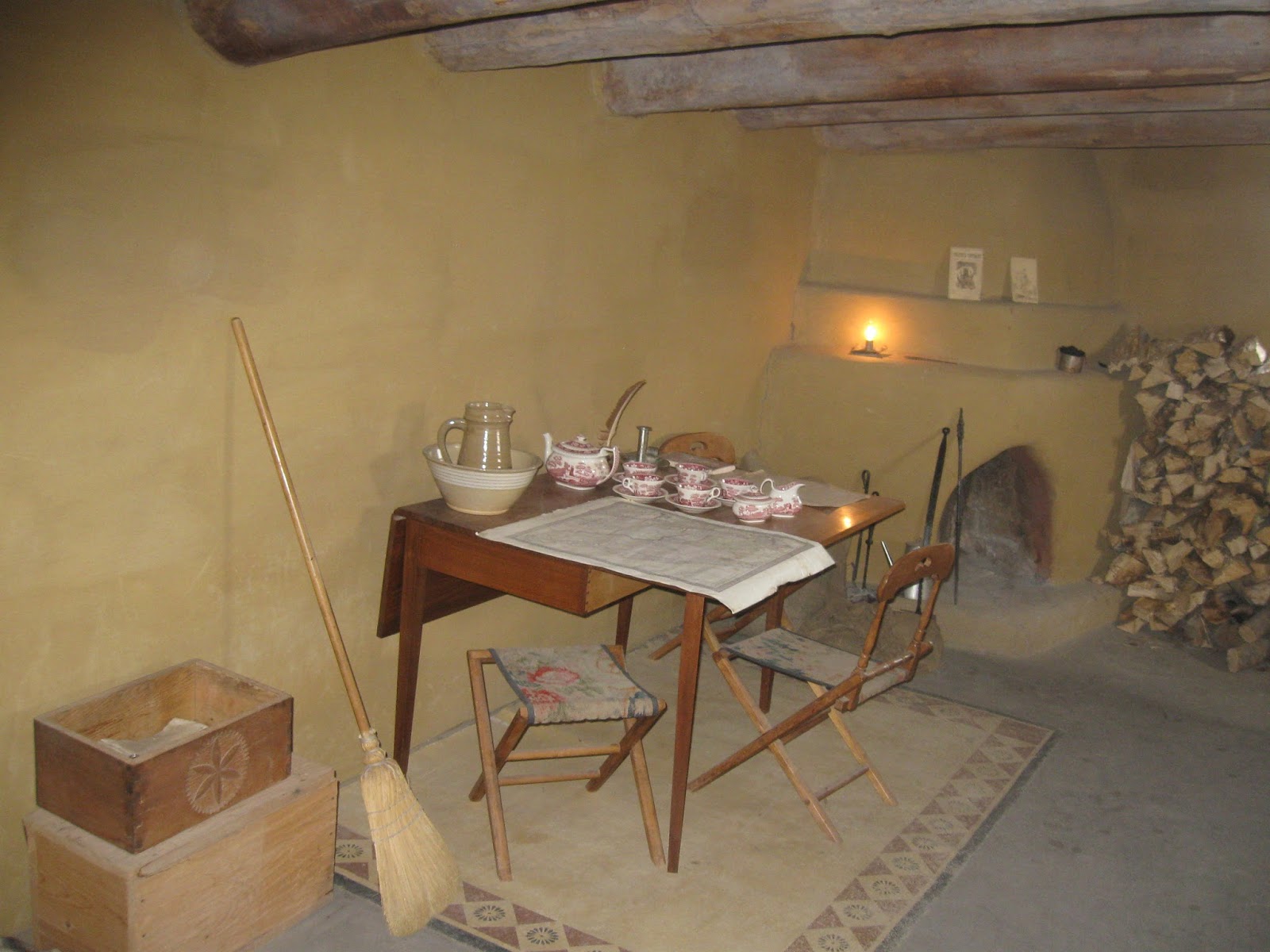
The secret of the fort’s construction was the adobe, because of the lack of lumber.  Mexican workers knew how to mix clay, water, sand and straw to create bricks in areas with little stone or wood.  The 18x9x4 inch bricks after drying in the sun became fairly durable when covered with an adobe plaster.  The wood that supported the roofs had to be floated down river from the mountains, the small trees found on the prarie like the cotton wood were unsuitable for load bearing. 

Drain

 The original walls would have needed regular repair. Today an epoxy is sprayed on them at regularly.   There are drains for the rainy season.  


At lease thirty employees were on staff during the fort’s busy years.   Mexicans maintained the walls, herded sheep, and trained horses and oxen.  Most of the skilled workman, carpenters, coopers, blacksmiths etc., were American.

The second floor was mostly quarters for the doctor, clerks and guests like Lt. Abert and Susan Magoffin a pregnant woman who had to stay there for several  weeks.
Second floor bedroom
 Mrs. Magoffin was shocked that gambling was so common noting the fort was equipped with a billiard room, a race track, and a cock fighting arena.   She also complained about the behavior of her servants, and the need to constantly moisten the dirt floors to cut down on dust. While she tried to rest she wrote the constant noise in the yard of "the shoeing of horses, neighing, and braying of mules, the crying of children, the scolding and fighting of men are all enought to turn my head. "


Both she and Lt Abert had a chance to observe a number of Native Americans visitors.  Three 'Arrapaho' indians were pointed out to Mrs. Magoffin as  probable spies. I was surprised  to find that large numbers of Indians were allowed to visit the fort at the same time.  It would seem unsafe but there are many sketches of large groups inside the fort at the same time.
Cheyenne Ceremony in fort 1848 

 It was a rough neighborhood as Mrs. Dale's experience proved.  A shepherd was murdered while working there and the killer was never caught. However there seems to be no record of an actually attack on the fort.


Today there is an excellent book store and a shop that offers some good historical recreations, knives etc. in the fort, along with water and bathrooms.


The nature trail running  along the Arkansas River is only of interest to serious students of plant life, but I may have seen a Spotted Plains Leopard Frog. 


Geek Factors-  Bent’s fort is  an important part of the novel  Flashman and the Redskins  an episode in George McDonald Fraser’s fictionalized history of the 19th century through the eyes of his creation cowardly, greedy, selfish General Harry Flashman of Her Majesties Army.


The recreated Fort was used in the CBS western miniseries The Chisholms (1979–1980) and briefly appeared in the1998 CBS mini-series Lonesome Dove.


References

Williams, Felicia,  Roadside Geology of Colorado   Mountain Press,  Missoula, Mt, 2014  ISBN 9780878426096 


Bent’s Old Fort National Historic Site  A Self-Guiding Tour,  National Park Service , U.S.  Department of the Interior


Dick, Everett (editor)  Tales of the Frontier  University of Nebraska,  Lincoln, NB, 1970    ISBN 0803257449


Zinn, Howard  A People’s History of the United States, Harper Collins, New York, NY 2003               ISBN9780060528423


Colorado Legends Bent’s Fort National Historic Site :
 http://www.legendsofamerica.com/co-bentsfort.html 


Bents Fort: http://exhibits.historycolorado.org/bentsfort/bents_home.html 


Abert, James,  Expedition to the Southwest: an 1845 Reconnaissance of Colorado, New Mexico, Texas and Oklahoma  , University of Nebraska Press, NB , 1999  ISBN 9780803259355


 Magoffin, Susan Shelby , Down the Santa Fe Trail and into Mexico ,  University of Nebraska Press, Lincoln , 1982,  ISBN 9780803281165


  National Park Service Bent's Old Fort : https://www.nps.gov/beol/index.htm


Tuesday, April 12, 2016

NASHVILLE: Music City U.S.A.


Market for Elephants – Nashville has several mammoths in the state museum.  They may have need of a replace for the state zoo.

Date of Visit:  Aug 7, 2015

History- Nashville is a city of about 650,000.  It is the capital of Tennessee and a major financial and transportation center.   However for tourists it is best known as Music City, and has the most valuable brand name in country music the Grand Ole Opry.

The city started as French Lick on the Cumberland River in 1780.  It was almost immediately renamed Fort Nashborough  after General Francis Nash a hero of the American Revolution and resisted a major Indian attack in 1781.  It was incorporated in 1784 as a town and named Nashville.  In 1843 it became the permanent capital of Tennessee.

For a one day visit I suggest a tourist go directly to the city center the physical music city.  It’s an interesting collection of museums, business buildings, and government buildings, including the Tennessee State Capitol building.  There is plenty of parking so, if you don’t take one of the several tours; I suggest visiting the following places.


County Music Hall of Fame & Museum:  I suggest starting here so you can go on the Studio B tour which prides itself as being the only tour of a studio in town.  Then take the audio tour of the museum allowing at least two hours so you can look at the video programs.  The audio tour will be of interest for both longtime fans, but even more for person like me who have only dipped their toe in it. For me the movie clips from Roy Rogers, Gene Autry, and Tex Ritter brought up many childhood memories.


The Lobby is open and able to be used as a performance area.

The Country Music Hall of Fame is a rotunda with a striking acrylic painting called The Sources of Country Music by Thomas Hart Benton.  Circling the room are round bronze plaques with the names and reliefs of musicians and a few comedians elected by the Country Music Association.  People are honored for business and technological contributions by other groups.


Country Music Hall Of Fame
The District: This is a two to four block area of old brick buildings centered on Broadway and 5th ave. Several restaurants have been restored to resemble old time honky-tonks, saloons and less savory establishments. The sort of places the riverboat men used to frequence. All of these have live music so you can choose your lunch and accompaniment. As you can see from these pictures at lunch time reservations are a good idea. There are also several clothing, instrument and record stores, the most famous being the Roy Orbison Record store. The spirit of The District is spread by these unique bar buses. The cycled model leaves a strong beer scent, similar to trucks before they took the lead out of gas.  


Pedalling Bar Maids.


Ryman Auditorium:  Often referred to as the High Church of Country 
Rhyman Hall

Music this building was designed as a chapel.  The self-guided
tour of Ryman starts with a film, really almost a magic show.
 It tells how in the 1880s a river boat captain and owner of a major transport company Captain Thomas G. Ryman was converted by traveling evangelist Sam Jones. Ryman helped raise the money so in 1892 the Union Gospel Tabernacle was opened to provide a permanent place for Jones to speak. 

The name was changed to Ryman Auditorium upon the Captain’s death in 1904.  From the beginning its acoustics attracted a white variety of performers, especially after installing a proper stage in 1901 for an opera performance. 

It had traveling theatrical groups, choirs, just about anything that could rent the theater. The radio program the Grand Ole Opry broadcast from Ryman from 1943-1974 cementing its place in country music history.  Even before the Opry left there were doubts that it could continue to operate, despite Johnny Cash filming his TV show there from 1969-1971.  It had to undergo a major renovation partly funded by donations and reopened in 1994.  Now it is not only a performance center, but a major tourist attraction.  You can not only view the displays but have your picture taken on stage (if it’s not busy) and record a disc in the attached studio, perhaps performing your own song on the Ryman label. Start practicing now. 

The Grand Ole Opry: is a radio program broadcast by station 650 AM WSM in Knoxville.  It also refers to their stock company of performers currently including people like Whispering Bill Anderson and Jeannie Seely.


The program started in 1925 when National Life & Accident Insurance Company began broadcasting from their downtown offices (WSM stands for We Shield Millions).  Its name was originally ‘WSM Barn Dance’. On December 10, 1927 the long running announcer, “Judge” George Hay, commenting on the previous program the NBC ‘Music Appreciation Hour’ said “we have been listening to music taken largely from Grand Opera.  From now on, we will present the ‘Grand Ole Opry.’

As the broadcast expanded to reach most of the east coast they developed their own stars such as Bill Monroe and the Blue Grass Boys, (who may be responsible for the term blue grass music) and the Carter family.  
Audience for the Opry
They also attracted a large live audience especially for their Saturday night show when farmers came into to town to blow off steam.  Several venues were tried before they settled on Ryman Auditorium.
War Time Opry

The Opry stayed at Ryman for almost 20 years, but in 1974 it departed for the new, larger, high tech Grand Ole Opry House across the Cumberland River, flanked by The Opry resort and the Opry Mills (a shopping center).  They broadcast four nights a week with a mix of their regular performers and guest stars, usually artists touring with a new hit.  

Among long term serious fans there are considered to be at least two major types of music presented at the Opry.  I found useful examples of both styles in the work of Johnny Paycheck,  Pardon Me I have Someone to Kill is a old type slow soulful song about how a man with only pride to his name must act when his wife is seduced. Take this Job and Shove It is about a man who cheerfuly realizes that his wife leaving him (and taking their savings) has left him free to leave a job he hates. 

MY VISIT- I purchased a ticket to the Grand Ole Opry well before my visit I got a great seat and was very happy with the performance that evening. 

However I suggest people with strong tastes in Country music check the performers at Ryman Auditorium, Opry House, and the Country Music Museum on the night of their visit to choose the most interesting show and then order a ticket ahead of time on the internet. 

The performance I attended was unusual because a contingency of Medal of Honor winners were their official guests.  Short videos were shown on the big screen with footage representing their feats.  

The one that stuck in my mind was the World War II veteran who emptied his flamethrower at Japanese fortifications, got back to the American lines and since no one else would go went forward and repeated the job. If I understand correctly he was running toward people firing hot bullets at him wearing tanks of explosive jellied gasoline.

In honor of the Medal holders Whispering Bill Anderson (nicknamed for his soft rough voice) performed his sentimental ballad “Old Army Hat". The official video for this is at www.youtube.com/watch?v=z90SxCg-0nU , A brief recounting of the song’s origin is available at www.youtube.com/watch?v=lgEsQIY3_-U.

Guest performer Raelynn a contestant in 2012 on the TV show The Voice performed her song “For A Boy”  www.youtube.com/watch?v=nsfcpUc7KaE  and then lead the audience in “America the Beautiful.”   Larry Gatlin of the Gatlin Brothers host for this part of the show gave a short speech praising her for choosing to sing something in honor of their special guests rather than promoting another of her songs.  He took a selfie with her with a borrowed camera from an audience member. with a lot of help from the phone’s owner.

The program ended with the introduction of an oddly boastful song by the Gatlin Brothers “An American With A Remington.” Check out an informal performance of the song by the authors of the song Larry Gatlin and Billy Dean at www.youtube.com/watch?v=CWtRpJucx3U.

An odd incident at the end of that night’s performance was, when it was announced that the Medal of Honor winners were leaving the building, a few voices booed from the back of the auditorium.  The two young men sitting beside me , probably serving military from their hair cuts were looking around. Invoking the power of gray hair over the young I suggested freedom of speech means putting up with rude people sometimes and we all set down to let the walkway clear.

Geek Factor  -  archives for episodes of the Grand Ole Opry from four years are available on wsmonline.com as well samples of their other shows, a special section of tribute shows and live streaming for those outside their broadcasting range.
Before visiting you may want to look at the many films set in the Nashville area especially William Altman’s Nashville (1975)  and Nashville Girl (1976).

Resources

Oermann, Robert T.  Behind the Ole Opry Curtain,  New York: Center Street, 2008  
 ISBN 1931722897

Havighurst, Craig,  Air Castle of the South: WSM and the Making of Music City.  Urbana, University of Illinois Press 2007   ISBN 0252032578

Nashville Music City: www.visitmusiccity.com

Ryman Auditorium :  www.ryman.com

Country Music Hall of Fame and Museum: www.countrymusichalloffame.org

The District Nashville: www.thedistrictnashville.org


Monday, April 11, 2016

Devils' Tower


                         DEVIL'S TOWER, WYOMING


Potential as Market for Elephants- None really they might find grazing around base of the tower  and to the south but would never survive winter or even fall.

Date of My Visit: 8/14/15

Geology--Devil’s Tower is a truly surprising feature shooting out of a near flat basin off US 90 in Wyoming.     


The Tower and some nearby structures called the Little Missouri Buttes may
be the remains of the throat of a volcano or they may be intrusive upwelling’s of igneous rock that never broke thru the thick layers of sedimentary rock to the surface. 


 Whichever is true much of the Devil’s Tower current appearance is the result of erosion by the Belle Fourche (Beautiful Fork) River.  The national park service measurements for the tower in 2014 were
867 feet tall from its base and 1,267 feet above the river. Its diameter at the base is 1,000 feet and its ill regular top is 1.5 sq. acres.


History- The tower, and the entire area, is important in several Native American tribes’ religious traditions.   Anthropologists record that at different times the Lakota, Cheyenne, and other tribes spent winters in the rich Belle Fourche Valley, while holding prayer and healing ceremonies at what they called the Bear Tower or Bear Lodge.

The Kiowa tell the legend of eight children, seven sisters and a brother, who were playing on the river bank.  The brother suddenly transformed into a bear and chased his sisters.  They scrambled on a large rock and begin to cry for help.  The rock grew and stretched into the sky until they were out of reach of the now gigantic bear.  He left his claw marks on the sides of the tower and pushed it a little off center.  The seven sisters were taken away into the sky were they became the Pleiades.

The striking vertical ‘bear scratches’ are called columnar joints by geologists and are formed by the cooling and contraction of the rock once heated to near liquid.   A boulder field, eroded from the tower by weather, lies around the base. 

The modern name Devil’s Tower was given it in 1875 by Col. Richard Dodge who led a military/scientific expedition to survey the Black Hills and possibly confirm reports of gold.  His journals say he was told by Native Americans that the tower was a dangerous place were evil spirits were found.   It has been suggested that bear god was translated as bad god.  Many Native Americans feel naming their sacred place Devil’s anything suggests a connection between Satanism and their traditional religious practices.

I wonder if his choice of the name Devil’s Tower was simply the result of Europeans calling unusual geographic features the Devil’s this and the Devil’s that.   In my 1949 Encyclopedia there are five places called the Devil’s this or that on one page.   

A request for a name change back to Bear Lodge is being considered by the U.S. Board of Geographic Names (See the e-mail reproduced at the bottom.)


The first recorded ascent to the top of Devil’s Tower was on July 4th 1893 by two locals William Rogers and Willard Ripley who had installed a wooden ladder for the first 350 feet. They raised a U.S. Flag and then sold pieces of it at their Lemonade stand.  An annual 4th of July picnic and fireworks display became an important social event linking the many remote ranches and small towns.

Today about 3000 rock climbers come to challenge the tower every year.  It is necessary to register with the ranger service.   Climbing may be canceled for weather or out of respect for Native American ceremonies.


With Permission of Lakota County Times
An example is the Sacred Hoop Run is a five-day, 500-mile relay run based on a myth about how the Lakota first came to the Black Hills. In the story, it is said that all the creatures of the plains gathered together to decide whether to allow the two-legged animals into their homeland. The winged creatures were for it, and the four-legged creatures were against it. To settle the matter, they raced in a big loop, or hoop, through the Black Hills. The first time the four legged won, the second time the winged won, and the third time a magpie rode on the back of a buffalo, and they won. Thereafter, all the creatures gave their blessing for the two-legged Lakota to enter the Black Hills.

In 1906 President Theodore Roosevelt proclaimed Devil’s Tower the first national monument using the Antiquities Act.  This bill passed in 1906 allows the president to, by proclamation, create national monuments from public lands to protect significant natural, cultural or scientific features.  It is one of the few things a president can do without any oversight.

My Visit- I was going west from Rapid City, South Dakota to Cody, Wyoming the day I visited so I left I-90 at Sundance, Wyoming.  Yes the site of Robert Redford’s famous film festival and the town the Sundance Kid took his alias from.  WY 14 takes one within sight of tower and then loops back to I-90 so I rejoined it at Moorcroft, a center of the coal and oil industry in the area. People coming from the east can just reverse my route.

One approaches the tower by a paved road that circles the base of the tower after purchasing a ticket.
Go to the parking lot and there is a paved path that leads to base of the boulder field.

I saw no one equipped for rock climbing, but the posted signs say that one need not register unless one climbs above the boulder field.  I saw several people climbing like these folks with only rubber sandals, flip flops we call them.

I took the short one and a half trail around the base of the tower getting a view of its vertical cracks from several angles.

 The further I got from the crowded parking lot and campground I saw more and more medicine bags and ribbons, religious items hung in the forest.   The paths have numerous reminders to stay on them and avoid disturbing these sacred activities.

The ranger station has nothing special in the way of souvenirs or books.


When leaving you get a good look at the red sandstone cliffs that surround the base and a prairie dog city.

 It is forbidden to feed the little animals or enter the actual field.  As you can see from these pictures they have learned to beg, but I recommend staying on the graveled overlook, history is full of people being injured stepping in prairie dog holes and they are sometimes occupied by rattlesnakes.